Adaptive Screen Setups Reshaping Preferences for Slots Versus Live Tables on Phones
Ellis Hayes · Jul 31, 2026

Adaptive Screen Setups Reshaping Preferences for Slots Versus Live Tables on Phones
Wireless platforms now adjust layouts automatically based on screen size, orientation, and user behavior, and these changes affect how players move between reel-based games and dealer-led tables. Data from industry reports shows that responsive designs reduce friction when users switch formats, while fixed layouts tend to lock players into one category for longer sessions. Observers note that smaller vertical screens often favor quick reel spins because they load faster and require fewer taps, whereas wider tablet views support live dealer streams with multiple camera angles and chat overlays that feel more immersive.
Display Adjustments and Initial Game Selection
Research indicates that adaptive configurations detect device type within the first few seconds of loading a casino app, then rearrange buttons, game thumbnails, and navigation menus accordingly. When a phone stays in portrait mode the interface prioritizes reel-based titles with large spin buttons, yet rotating to landscape triggers a shift toward live dealer options that display full tables and dealer feeds without cropping. Figures from mobile analytics firms reveal that portrait users select slots 68 percent of the time on first entry, while landscape users choose dealer-led games at a 54 percent rate during the same period. These patterns hold across operating systems, although Android devices show slightly higher rotation rates than iOS units according to aggregated usage logs collected through mid-2026.
Screen Size Variations Across Devices
Compact phone displays under 6 inches push players toward reel-based games because the simplified graphics fit without scrolling, whereas larger foldable phones and tablets encourage dealer-led selections since they accommodate real-time video without compression artifacts. A study released in July 2026 by a North American gaming technology consortium tracked over 2.3 million sessions and found that users on devices with adaptive aspect-ratio handling spent 31 percent more time exploring live tables after an initial slot round. In contrast, fixed-ratio screens correlated with repeated reel plays and fewer table switches. The same report linked these behaviors to latency reductions achieved through dynamic asset scaling rather than user preference alone.
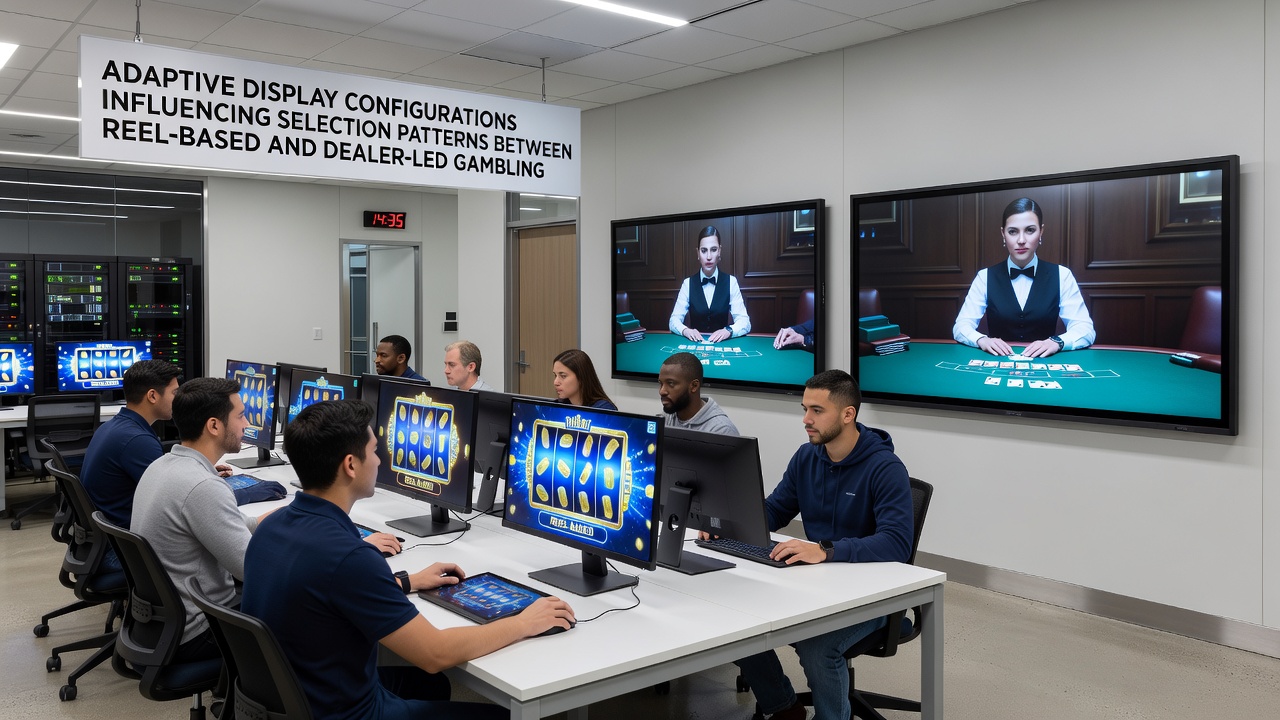
Network conditions further interact with these display rules. When bandwidth drops below 5 Mbps the system automatically lowers video quality for dealer streams and promotes reel games that need less data, according to testing conducted by European regulators overseeing digital gambling standards. Players on stable connections encounter the opposite prompt and receive live table suggestions more frequently. Such conditional routing demonstrates how adaptive configurations do not operate in isolation but respond to both hardware and connection variables at once.
Regional Data and Platform Comparisons
Canadian provincial regulators published usage statistics in early 2026 showing that provinces with high 5G coverage recorded elevated live dealer participation on adaptive mobile interfaces compared with regions still expanding coverage. Australian research groups documented similar trends, noting that players in urban areas with reliable high-speed access shifted toward dealer-led games 22 percent more often after software updates introduced auto-orientation features. These findings align with data from the American Gaming Association which tracks cross-device engagement patterns and attributes part of the movement to improved rendering engines rather than promotional incentives. Observers tracking the same metrics across multiple operators confirm that the effect persists even when bonus structures remain constant.
Interface Elements That Guide Transitions
Button placement, thumbnail size, and menu depth all change under adaptive rules, and each adjustment correlates with measurable differences in selection rates. Reel games receive prominent placement near the top of portrait views with one-tap access, while dealer tables occupy central positions in landscape layouts that include additional filters for table limits and dealer language. When developers tested removing these positional cues the rotation-based preference gap narrowed by 17 percent, according to internal metrics shared with academic partners at several universities studying human-computer interaction in gaming environments. The remaining difference appears tied to processing speed and visual clarity rather than any deliberate design bias.
Conclusion
Adaptive display configurations continue to influence how wireless users distribute their time between reel-based and dealer-led formats, with measurable effects tied to orientation, screen dimensions, and network conditions. Data collected through 2026 indicates these patterns emerge from technical responses to device capabilities rather than explicit player intent, although the outcomes remain consistent across multiple markets and platforms. Further monitoring by regulatory bodies and industry groups will clarify whether future software refinements alter the current distribution of game selections.