Player Movement Trends Fueling Bundle Strategies Across Casino Platforms
Erik Jung · Aug 23, 2026

Player Movement Trends Fueling Bundle Strategies Across Casino Platforms
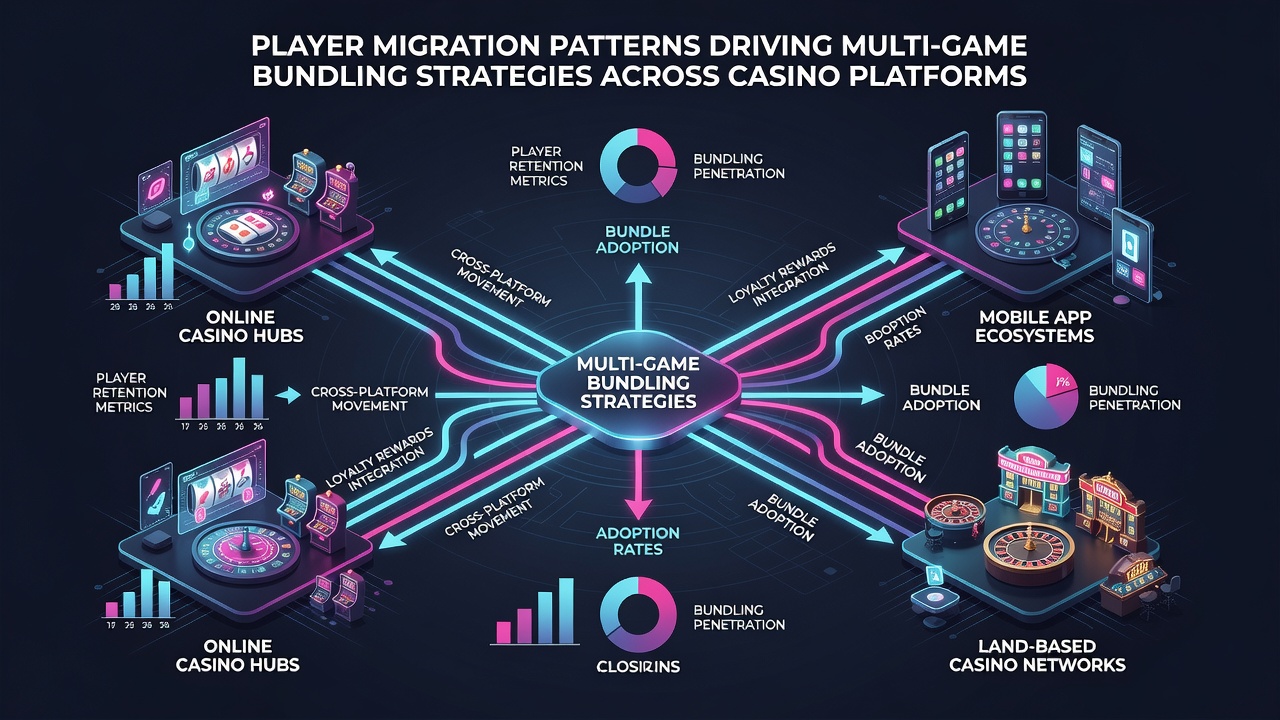
Player migration patterns have reshaped how casino platforms structure their offerings, with data indicating shifts from standalone slots to integrated experiences that combine multiple game categories. Reports from industry analysts show users moving between mobile slots, live dealer tables, and progressive jackpot networks within single sessions, prompting operators to develop multi-game bundles that align with these flows. As of August 2026, tracking studies reveal consistent cross-category movement, where players who begin with video slots often transition to table games when promotional incentives link the two formats together.
Understanding Migration Data in Digital Gaming
Research from gaming associations across North America and Europe documents rising patterns of player movement, with figures from the Canadian Gaming Association highlighting a 28 percent increase in multi-platform activity during the first half of 2026. Players frequently start sessions on one device type and continue on another, carrying progress through bundled rewards that span slots, blackjack, and roulette variants. This behavior drives platforms to create packages that reward sequential play rather than isolated game sessions.
Observers note that migration accelerates when operators introduce time-limited bundles, such as slot wins unlocking live dealer credits or jackpot contributions feeding into table game multipliers. Data from academic studies at institutions like the University of Nevada's gaming research center supports these observations, showing that users who engage with bundled content exhibit longer retention across different game verticals compared to those limited to single categories.
Platform Responses Through Bundling Tactics
Casino operators respond to these patterns by designing bundles that follow documented migration routes. One common approach ties slot progressions directly to live table access, allowing accumulated points to convert into higher-limit seats or exclusive dealer interactions. Industry reports indicate this method captures players who shift categories mid-session, reducing drop-off rates that occur when users must navigate separate interfaces for each game type.
What's interesting is how regional regulations influence these strategies, with platforms in Australia adapting bundles to comply with local payout structures while still accommodating cross-game flows. European operators meanwhile integrate crypto elements into bundles to appeal to migrating users who prefer flexible transaction methods across multiple titles.
Platforms also monitor seasonal spikes, such as increased migration during major sporting events when users alternate between casino games and prediction markets. Bundles that include both elements see higher uptake according to aggregated platform metrics shared by trade groups.
Examples from Major Markets
Take one operator in the Asia-Pacific region that introduced a bundle linking angler-themed slots with poker tables, resulting in measurable increases in session length as players moved between the two. Similar tactics appear in North American markets, where progressive jackpot contributions from mobile slots feed into live dealer rewards, encouraging users to migrate across formats without losing accumulated value.
Another case involves platforms adjusting bundles after observing data from the Australian Communications and Media Authority, which tracks player transitions between game categories. Operators use these insights to time bundle releases with peak migration periods, such as evenings when users shift from casual slots to higher-stakes tables.
Technical and Regulatory Influences
Payment integrations play a supporting role, with instant deposit options enabling seamless movement between bundled games. Research indicates that platforms offering unified wallets across slots and live tables experience reduced friction during player migrations. Regulatory bodies in multiple jurisdictions, including those in Canada and parts of the European Union, have updated guidelines to accommodate these bundled models while maintaining responsible gaming standards.
Biometric verification tools further support bundling by allowing quick access across game types once initial authentication occurs. This reduces barriers for users who migrate frequently between devices or categories.
Conclusion
Player migration patterns continue to shape multi-game bundling across casino platforms, with evidence from industry reports and regulatory data guiding development of integrated offers. Platforms that align bundles with observed movement trends between slots, tables, and jackpots report sustained engagement levels. As tracking methods advance, operators refine these strategies to match evolving user flows while operating within regional compliance frameworks.