Nevada Gaming Control Board Approves Golden Entertainment's Move to Go Private in $30-Per-Share Deal
Rafael Günther · Apr 14, 2026

Nevada Gaming Control Board Approves Golden Entertainment's Move to Go Private in $30-Per-Share Deal
The Unanimous Decision on April 8, 2026
On April 8, 2026, the Nevada Gaming Control Board delivered a unanimous green light to Golden Entertainment Inc.'s application, clearing the path for the Las Vegas-based company to deregister as a public entity and transition fully into private hands; this pivotal step, detailed in official dispositions, sets the stage for a transformative transaction where operating assets head to CEO Blake Sartini and his affiliates, while real estate shifts to VICI Properties through a sale-leaseback arrangement pegged at $30 per share.
What's interesting here is how regulators moved swiftly on this, signaling confidence in the deal's structure even as final nods remain pending; the board's approval, captured in their April 2026 agenda disposition, underscores a process that's been methodical, with Golden Entertainment navigating public disclosures and stakeholder reviews along the way.
Those who've followed Nevada's gaming landscape know these approvals don't come lightly, since they involve rigorous vetting of financials, leadership integrity, and operational continuity; Golden Entertainment, operator of iconic spots like The Strat Hotel Casino, Arizona Charlie's, and the widespread PT's taverns, positions this shift as a way to sharpen long-term strategies without the quarterly reporting grind that public status demands.
Breaking Down the Deal's Core Components
The transaction splits neatly into two lanes: operating assets, including the day-to-day casino and tavern businesses, land with CEO Blake Sartini and affiliates who'll steer them forward; real estate, meanwhile, transfers to VICI Properties, a major player in gaming real estate, via a sale-leaseback that lets Golden Entertainment lease back the properties post-sale, ensuring seamless continuity while unlocking capital at that $30-per-share valuation.
Turns out this setup mirrors strategies others in the sector have pursued, where sale-leasebacks free up balance sheets for reinvestment, although here it ties directly to privatization; according to reports from the Las Vegas Review-Journal, the move aims to ditch public market pressures, allowing focus on operational tweaks and growth in Nevada's competitive gaming scene.
Golden Entertainment's portfolio brings heft to the table; The Strat, that towering fixture on the Las Vegas Strip with its 1,149-foot needle observation tower, draws crowds for gaming, shows, and thrills; Arizona Charlie's, spanning Boulder and Decatur locations, caters to locals with slots, table games, and budget-friendly vibes; PT's taverns, a network of neighborhood haunts across Nevada and beyond, serve up tavern-style gaming that's become a staple for casual players.
And while the company has evolved through acquisitions—snapping up assets like these over years—the push to private status reflects a calculated pivot, especially as Sartini, who's led since 2019, eyes deeper control over destiny.
The Regulatory Path Ahead and What It Means
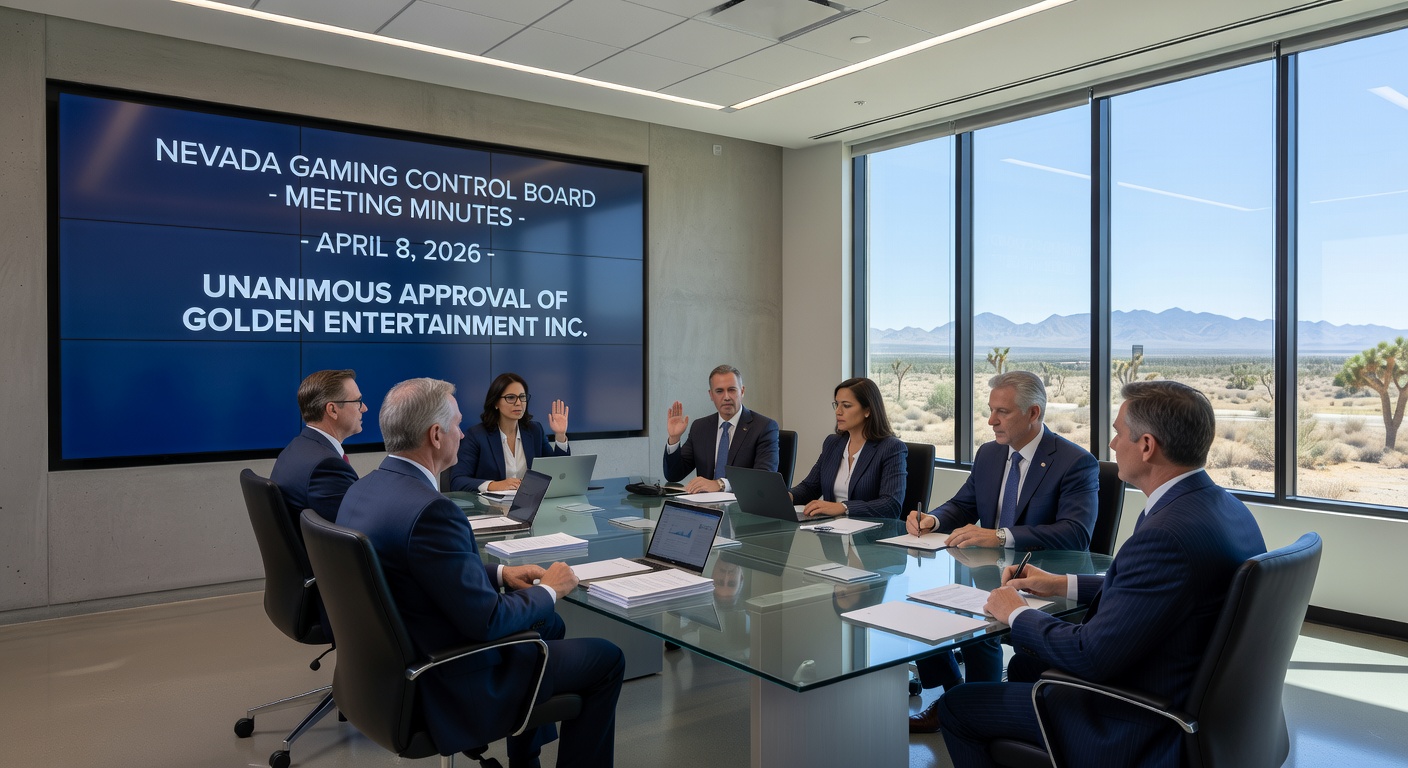
With the Gaming Control Board's thumbs-up secured, attention now turns to the Nevada Gaming Commission, scheduled to deliberate on April 23, 2026, in Carson City; that's the final hurdle, where commissioners will scrutinize the same details—deal terms, buyer qualifications, and post-transaction safeguards—before stamping full approval or tweaks.
Observers note these commission meetings often build on board recommendations, since the two bodies collaborate closely under Nevada's gaming enforcement framework; data from past dispositions shows unanimous board votes like this one frequently pave smooth roads forward, although variables like public comments or last-minute filings can influence outcomes.
Here's where it gets interesting: going private lifts SEC reporting burdens, freeing executives to chase initiatives like property upgrades or expansions without shareholder quarterly scrutiny; for Golden Entertainment, that could mean bolstering PT's tavern network, which boasts over 60 locations emphasizing video poker and sports betting, or refreshing The Strat's attractions amid Las Vegas's evolving entertainment mix.
Take one case from recent gaming history where a similar privatization unfolded—companies shed public status to streamline decisions, and while specifics vary, the pattern holds: enhanced agility in a market where locals' casinos and Strip icons face online betting pressures and tourism shifts.
Golden Entertainment's Backstory and Strategic Positioning
Founded through mergers and buys, Golden Entertainment traces roots to American Casino & Entertainment Properties, later merging with Lakes Entertainment in 2015 to form its current shape; Blake Sartini stepped in as CEO post-2019 spin-off from Pier, bringing experience from private equity plays in gaming and hospitality.
The company's footprint spans Nevada primarily, with Arizona Charlie's anchoring locals' gaming—think affordable rooms, diverse dining, and loyalty programs that keep regulars returning—while PT's taverns dot the landscape from Las Vegas suburbs to regional spots, offering that neighborhood feel with gaming licenses fueling revenue.
The Strat stands out, though; reopened under Golden in 2010 after a rough patch, it blends casino floors with thrill rides like SkyJump and a revolving restaurant, drawing both tourists and locals; figures from company filings reveal steady slot and table performance, underscoring why VICI Properties eyes the real estate as prime leaseback material.
But here's the thing: this deal values the enterprise at roughly $1.7 billion based on shares outstanding, a premium over recent trading that sweetened the pot for public holders; shareholders, set to cash out at $30 apiece, faced a choice earlier via proxy fights and tender offers, with strong uptake signaling buy-in.
Implications for Nevada's Gaming Ecosystem
As privatization nears, ripple effects touch suppliers, employees, and competitors; VICI Properties, already landlord to giants like Caesars and MGM properties, expands its Nevada portfolio, bolstering steady rental streams from sale-leasebacks that have defined its model since spinning off from Caesars in 2017.
Sartini and affiliates, taking operational reins, inherit a lineup primed for locals' market dominance—PT's alone generated significant tavern gaming revenue, per past reports, while Arizona Charlie's thrives on value propositions amid rising Strip costs.
Regulators' role remains central, ensuring the transition upholds Nevada's gold-standard oversight; the April 8 board vote, unanimous across five members, reflects thorough due diligence on financing, background checks, and compliance plans detailed in the National Today coverage.
People who've tracked these shifts often discover that private ownership accelerates renovations—like potential Strat tower enhancements or tavern tech upgrades—without disclosure delays; yet the Gaming Commission's April 23 session will confirm if all pieces align for closure soon after.
It's noteworthy that this unfolds against a booming 2026 gaming year, with Nevada revenues climbing on sports wagering and tourism rebounds, positioning Golden's assets for sustained play.
Conclusion
The Nevada Gaming Control Board's April 8, 2026, unanimous approval marks a decisive stride for Golden Entertainment toward privatization, splitting assets between CEO Blake Sartini and VICI Properties at $30 per share while promising operational focus unhindered by public mandates; with the Nevada Gaming Commission's review looming on April 23 in Carson City, the deal's completion hangs in balance, but precedents suggest smooth sailing ahead.
For stakeholders eyeing Las Vegas gaming's pulse—from The Strat's skyline perch to PT's tavern ubiquity—this transaction reshapes a key player, underscoring how strategic pivots keep pace with industry demands; observers await that final commission nod, knowing it seals a new chapter for these beloved Nevada staples.